
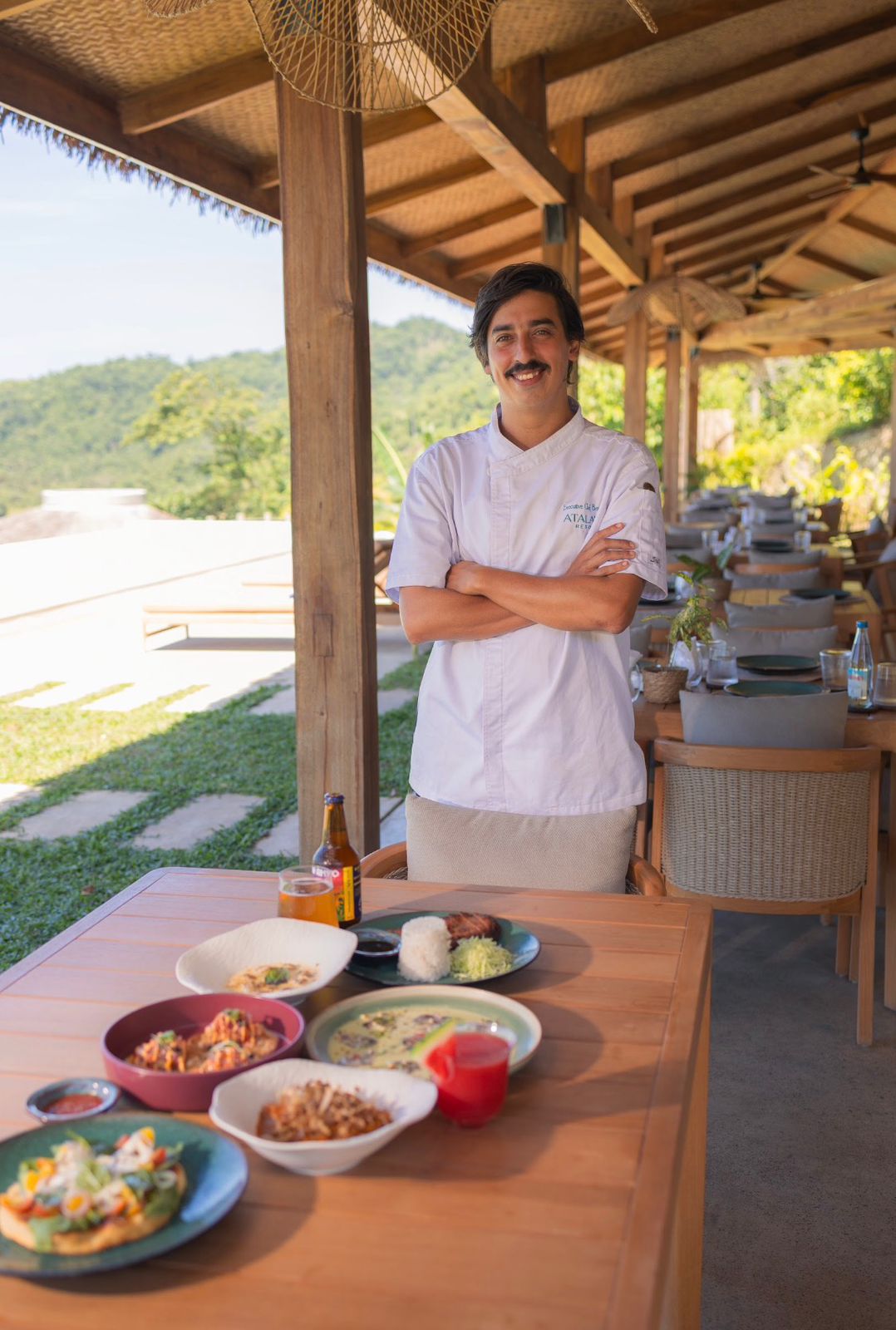
At five o'clock, the grill gets lit. Not preheated, lit, with wood, the way it's been done in Argentina for generations before anyone called it a technique. By the time the first guests are seated at Atalaya, the embers are already doing the quiet work that will define the next five hours of service, turning cuts of meat, whole fish, and root vegetables into the plates that carry our name.
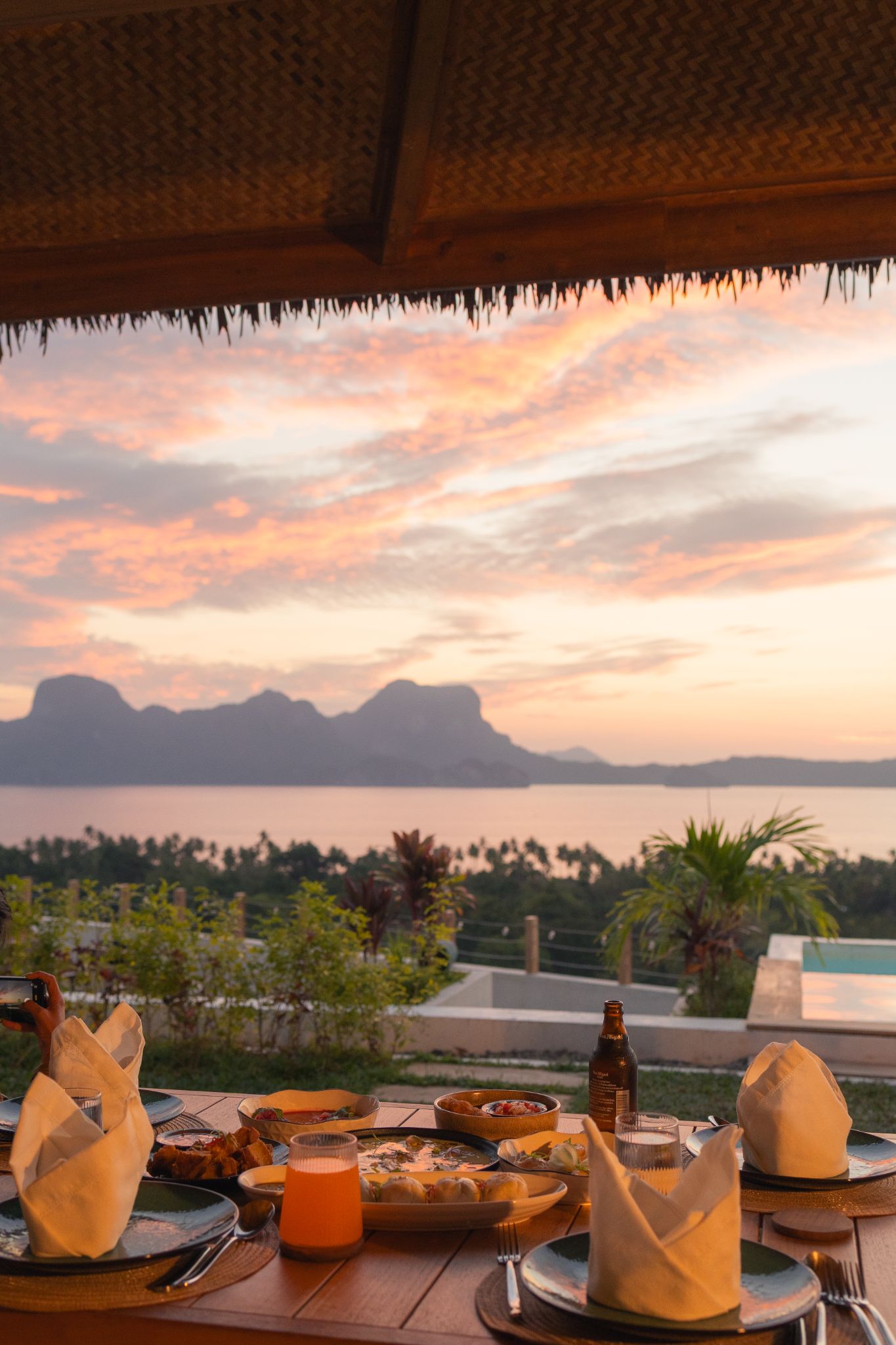
Chef Bautista has run that fire every night since Asado by Atalaya opened. Ask him what the dish is really about and he won't talk about plating. He'll talk about heat management, about where the ingredients came from that morning, and about Lamoro itself, the stretch of coastline in El Nido, Palawan, where Atalaya sits looking out over Bacuit Bay. His cooking is less a fusion of cuisines than a conversation between three places: the pampas tradition of Argentina, the sun and herb-forward instincts of the Mediterranean, and the sea, garden, and grill of a Filipino coastal kitchen.
The fire is Argentinian. The instinct is local.
Asado, in its home country, refers to both a grilling method and the gathering built around it. It names the technique and the social event of a barbecue across several South American countries, most closely tied to the traditions of Argentina and Uruguay, where hours of slow cooking over live coals are as much about company as they are about food. That's the tradition Chef Bautista trained in, and it's the one he keeps intact at Atalaya, with real embers instead of gas and timing measured by touch instead of a timer.
The technique most closely associated with the kitchen is al rescoldo, cooking directly in and under hot coals and ash rather than over an open grate. It's an old method, closer to the earth than most modern grilling, and it's why a piece of tenderloin coming off Atalaya's fire carries a different kind of char than the flame-grilled version most diners expect. "You're not fighting the fire," is how the kitchen team describes it. "You're reading it."
What sits beside that meat is just as deliberate. Chimichurri is Argentina's own invention, an uncooked table sauce built from finely chopped parsley, garlic, chili, olive oil, oregano, and vinegar or citrus, traditionally served alongside grilled meat. At Atalaya it's built from herbs pulled that same morning from a plot of land twelve minutes down the road. The sauce is Argentinian. The parsley isn't imported. That's the whole approach in miniature.
Twelve minutes to New Ibajay
Ask where the kitchen's ingredients come from and the answer, more and more often, is New Ibajay, a barangay just outside El Nido proper where Atalaya has planted its own small farm. It's a young project, still finding its footing, growing specialty herbs for the grill and the cocktail bar, seasonal fruit, vegetables, and farm-fresh eggs. The idea isn't self-sufficiency for its own sake, it's proximity. Herbs picked that morning taste different from herbs shipped in, and a menu that changes with what's actually growing forces a kitchen to stay honest about seasonality instead of printing the same dishes year-round.
There's a quieter reason New Ibajay matters, too. The area sits in the Dewil Valley, home to some of the oldest documented signs of human settlement in the Philippines, with archaeological finds in the valley's Ille Cave dating back thousands of years to the Late Neolithic Age. People have been finding ways to eat well off this particular stretch of land for longer than most culinary traditions have existed. Chef Bautista isn't reinventing that relationship between land and table, he's just the latest person tending it.
Full story on the farm project: Growing Our Eco Food Project in New Ibajay →
The sea does the rest
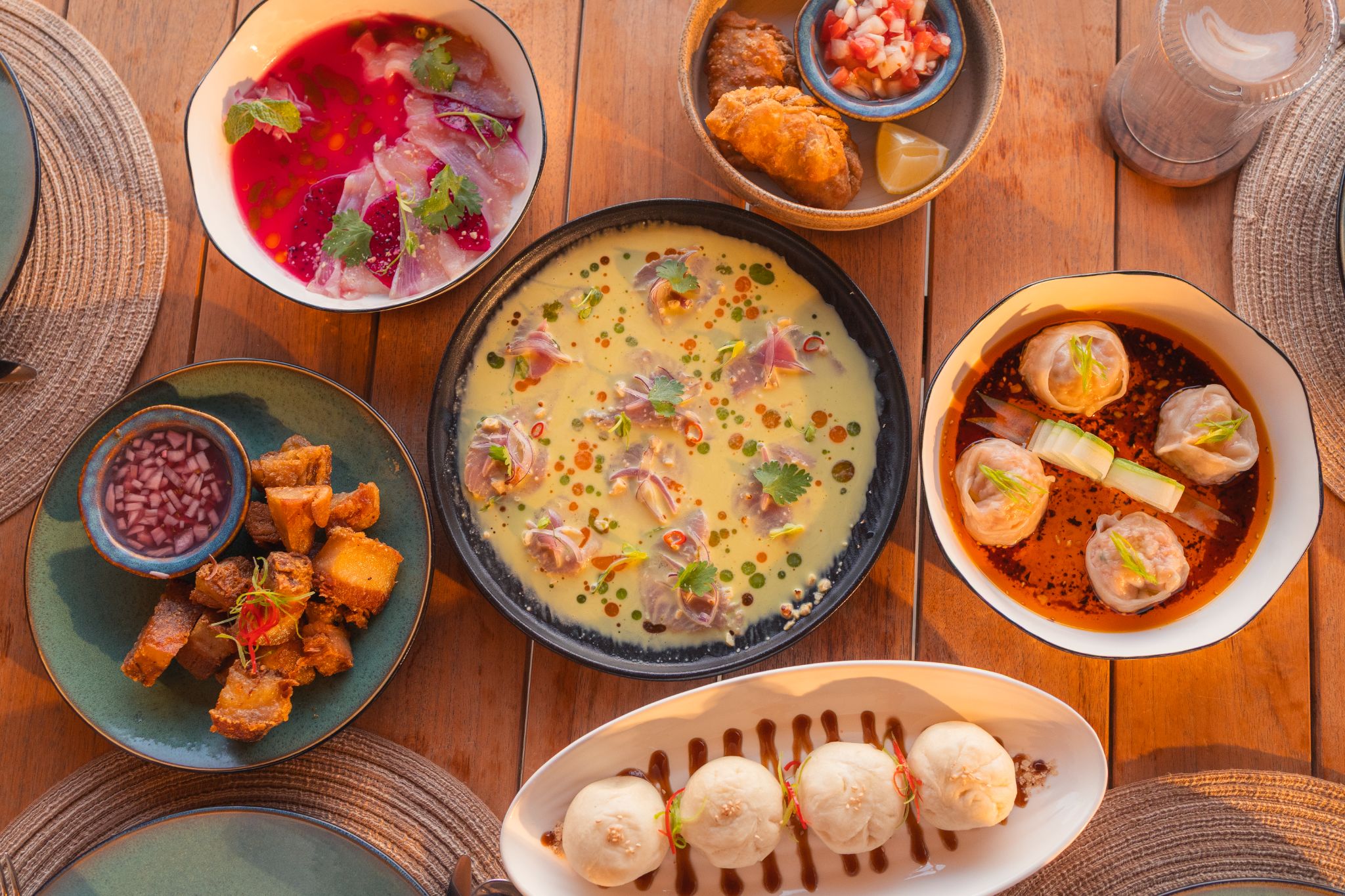
What the farm doesn't grow, Bacuit Bay usually provides. Fresh catch, tiger shrimp, reef fish, whatever the local boats bring in, moves through the kitchen the same day it's caught, most often prepared as kinilaw: fish or seafood "cooked" not by heat but by acid, traditionally vinegar and calamansi. Kinilaw is one of the Philippines' oldest native seafood preparations, a process that relies on vinegar and citrus to gently transform raw ingredients rather than heat. It's one of the oldest preparations in Filipino cooking, older than most of the techniques it now sits beside on Atalaya's menu, and it's the clearest example of what "Modern Filipino-Mediterranean" actually means on this coastline: nothing is added that the dish doesn't need.
Alongside it, the Mediterranean side of the kitchen shows up in techniques rather than imported ingredients: olive oil, citrus, char, and restraint. Tiradito, Kinilaw's Peruvian-by-way-of-Japan cousin, and Turkish-style eggs on the breakfast menu round out a kitchen that borrows technique freely but insists on Palawan doing the sourcing.
What "cooking with the land" actually looks like, night to night
None of this is abstract for the kitchen team. It shows up as a set of daily decisions:
- 5:00 PM, fire is lit. Ninety minutes before the first plate goes out, embers are already building. Asado by Atalaya runs nightly from 5:00 to 10:00 PM.
- Morning harvest, same-day plate. Herbs and produce come from New Ibajay the morning they're used, with no cold storage buffer and no multi-day turnaround.
- The catch decides the menu, not the other way around. What Bacuit Bay's boats bring in shapes the kinilaw and grilled-fish specials more than any fixed rotation does.
- Salt, fire, and acid, added with restraint. In keeping with the Argentinian grill tradition, seasoning happens with the fire rather than a marinade, and sauces and citrus finish the dish at the plate.
- Technique gets named, not flattened. Al rescoldo, chimichurri, kinilaw, tiradito: the kitchen calls each dish what it is, because the origin is the point, not a detail to smooth over.
A kitchen built on three coastlines
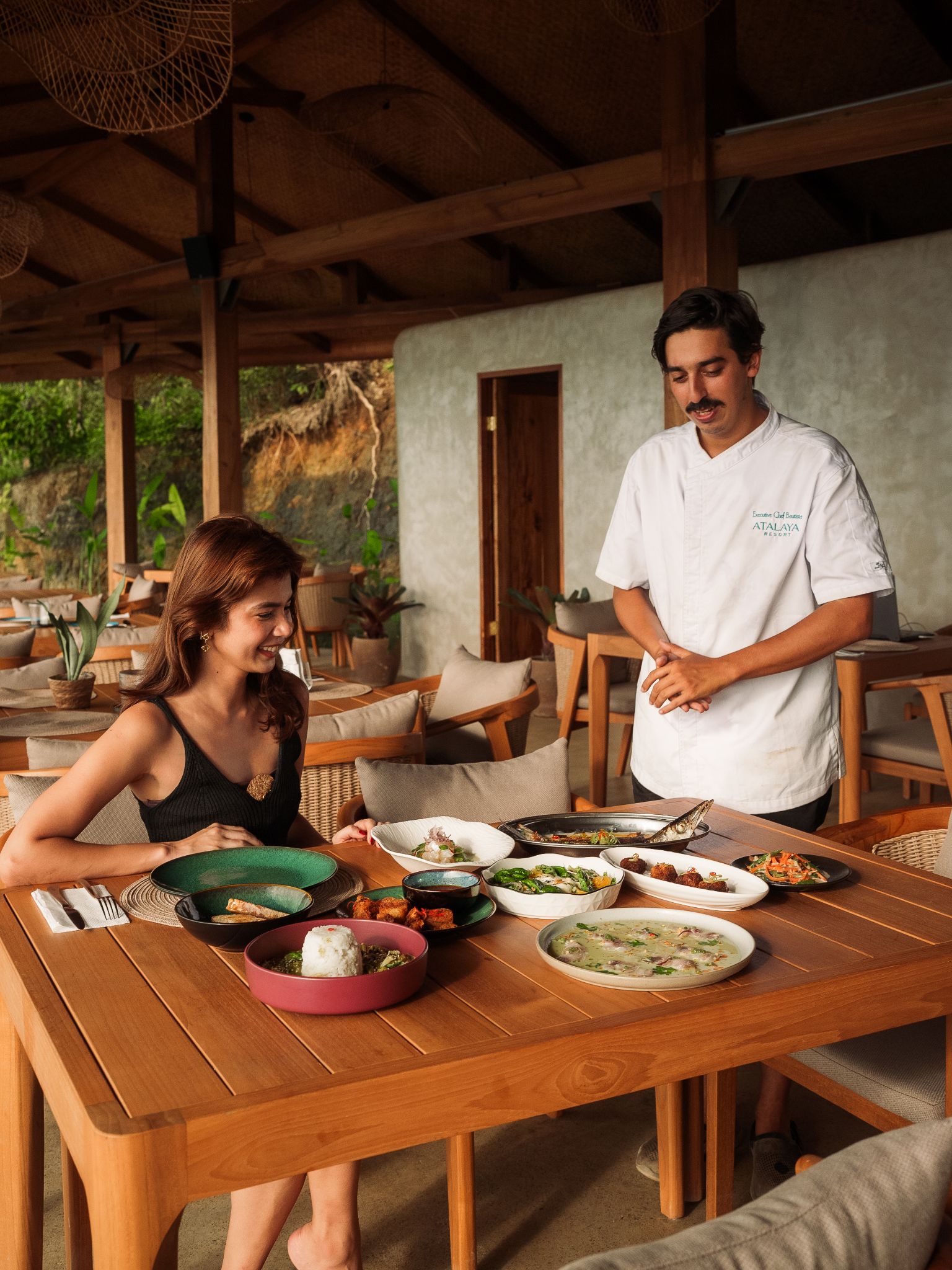
It would be easy to describe Atalaya's food as fusion and leave it there, but that undersells what's actually happening on the grill each night. This is a kitchen where an Argentinian gaucho's fire-management instincts, a Mediterranean cook's trust in a few good ingredients, and a Filipino coastal tradition of letting the catch and the harvest set the terms are all operating at once, often on the same plate. Chef Bautista's role isn't to blend those traditions into something generic. It's to keep each one legible while making sure they still make sense together, course after course, table after table, from five o'clock to ten.
That's the short version of what "A Culinary Journey" means at Atalaya. The long version is best experienced in person, seated at the sunset bar, watching the fire do its work.
Reserve a table → · See the current menu →
Further reading on the techniques and traditions behind Atalaya's kitchen: